
How Should Olive Oil Be Stored to Preserve Its Qualities?
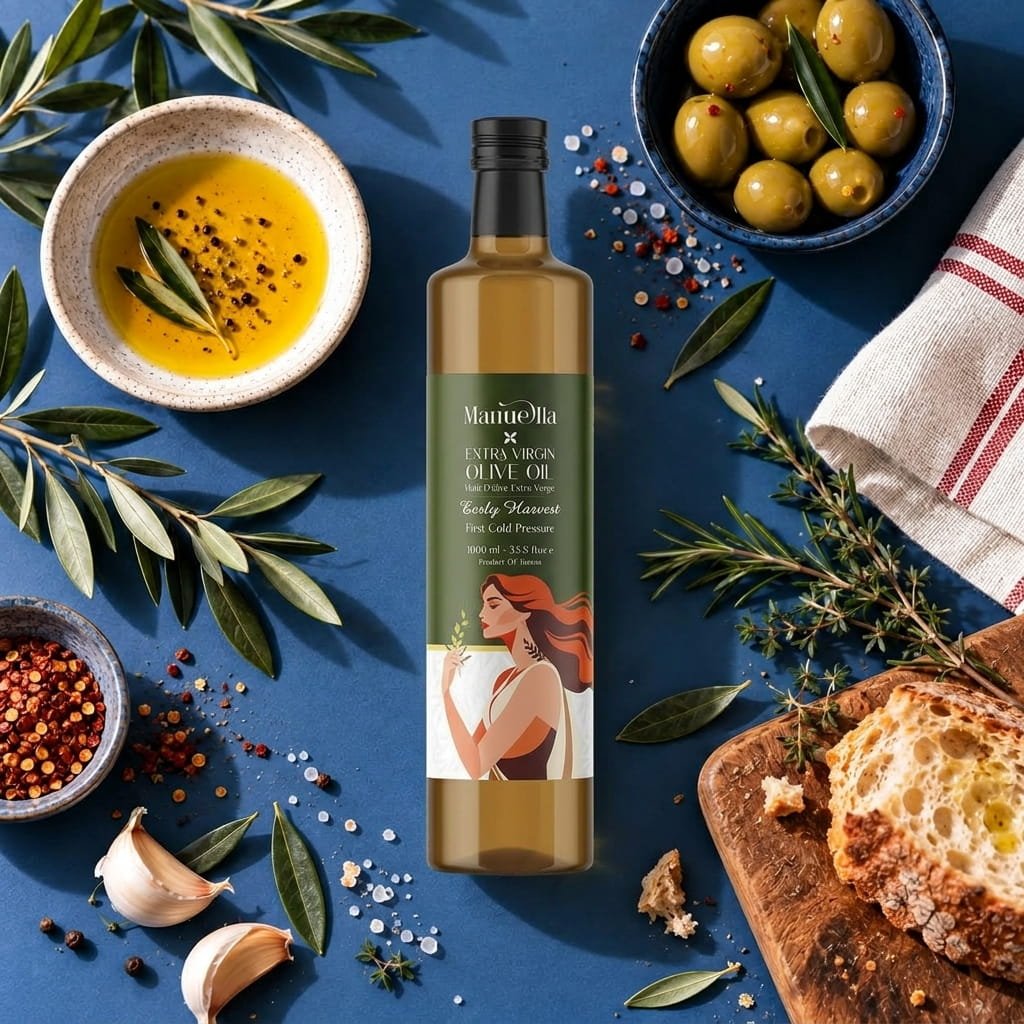
You have chosen a good extra virgin olive oil. It still needs to be stored properly.
Unlike some bottles that are left to age in a cellar, olive oil is a product whose qualities change over time. Improper storage can accelerate its oxidation and gradually alter its sensory characteristics.
However, a few simple steps can help protect it better.
1. Protect Olive Oil from Light
Light is one of the factors that can accelerate the deterioration of olive oil.
The International Olive Council recommends limiting its exposure to light, as well as to heat and air, in order to slow down oxidation.
Inspired by Tunisia, its land, and its Mediterranean culture, this oil offers a contemporary interpretation of an ancient heritage. It invites you to rediscover the generosity and character of Tunisian flavors in every dish.
An easily accessible cupboard or a shaded area of the kitchen will generally be more suitable.
2. Avoid heat sources.
Being close to the stovetop and oven is convenient… but it’s not necessarily the best location.
Repeated exposure to high temperatures can accelerate the degradation of the oil.
The best practice is therefore to store your bottle in a moderate-temperature place, away from direct sources of heat. More broadly, the IOC recommends protecting olive oil from excessive heat.
3. Close the bottle after each use.
Each time the bottle is opened, the oil comes into contact with air.
Oxygen contributes to oxidation reactions. It is therefore preferable not to leave a bottle unnecessarily open on the table or throughout meal preparation.
Pour the amount needed, then close the bottle.
Simple, yet effective.
4. Choose a size that matches your consumption.
Choosing the right size also has a practical aspect.
Someone who uses olive oil daily may naturally choose a larger bottle. For occasional use or to keep several different oils on hand, a smaller format can be particularly convenient.
That is precisely the benefit of offering different sizes: matching the quantity purchased to your actual rate of consumption.
5. Should olive oil be stored in the refrigerator?
In a typical home kitchen, refrigeration is generally not necessary.
The main goal is to avoid unfavorable conditions: excessive heat, light, and prolonged exposure to air.
Storing it in a cool, dry, and dark place is therefore better suited to everyday use.
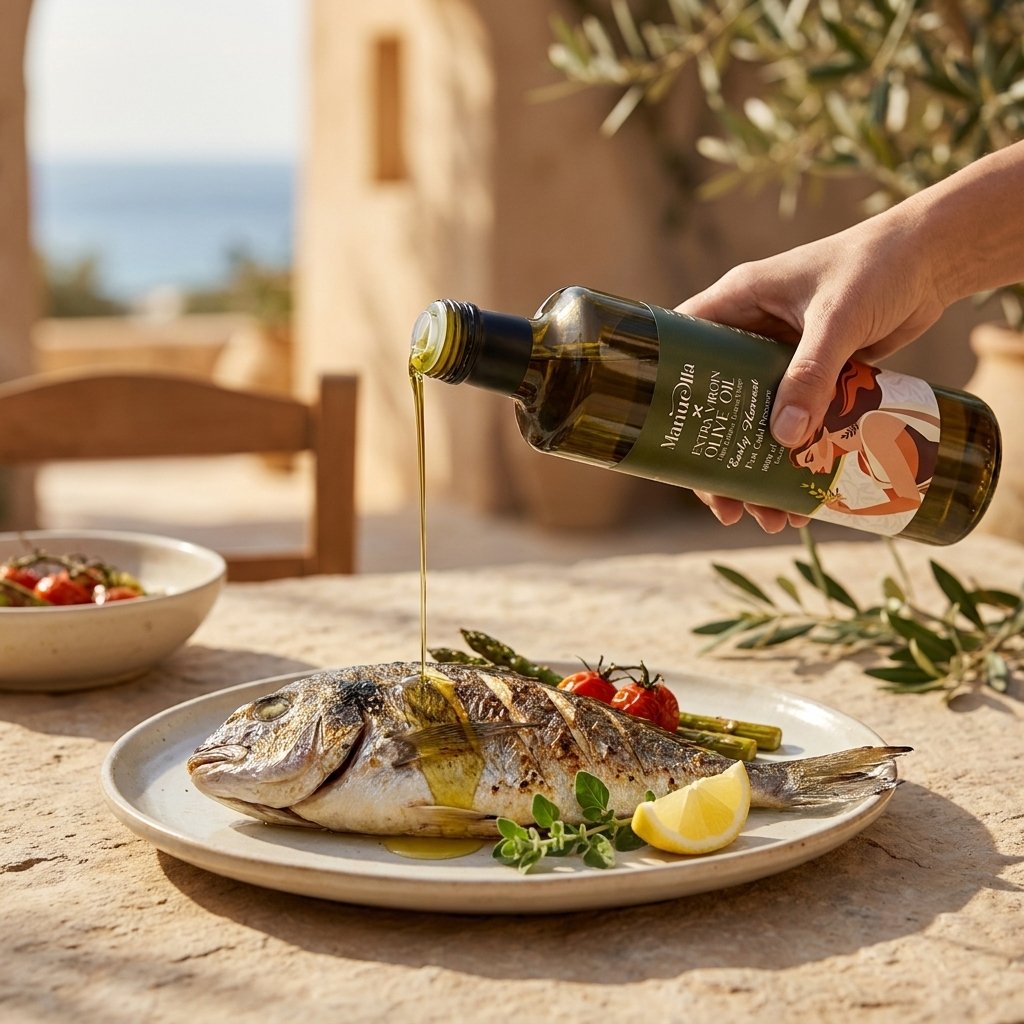
6. And after opening?
After opening, make a habit of checking the aroma of your oil.
Une huile correctement conservée doit conserver un profil agréable correspondant à ses caractéristiques initiales. Avec le temps et l’oxydation, ses qualités aromatiques peuvent progressivement diminuer.
Hence, one simple rule: Choose a volume that matches your consumption and enjoy your oil rather than keeping it indefinitely.
Manuella, from the bottle to your table.
Olive oil is meant to be used.
On a salad, with bread, to accompany vegetables, enhance pasta, or simply finish a dish, a few simple storage habits are enough to help preserve what gives it its character.
This post has one comment
Comments are closed.


A WordPress Commenter
11 Sep 2026Hi, this is a comment.
To get started with moderating, editing, and deleting comments, please visit the Comments screen in the dashboard.
Commenter avatars come from Gravatar.